Maya Leaders Alliance
An alliance of Maya organizations and leaders. JCS works alongside the MLA to advance land rights nationally and internationally.
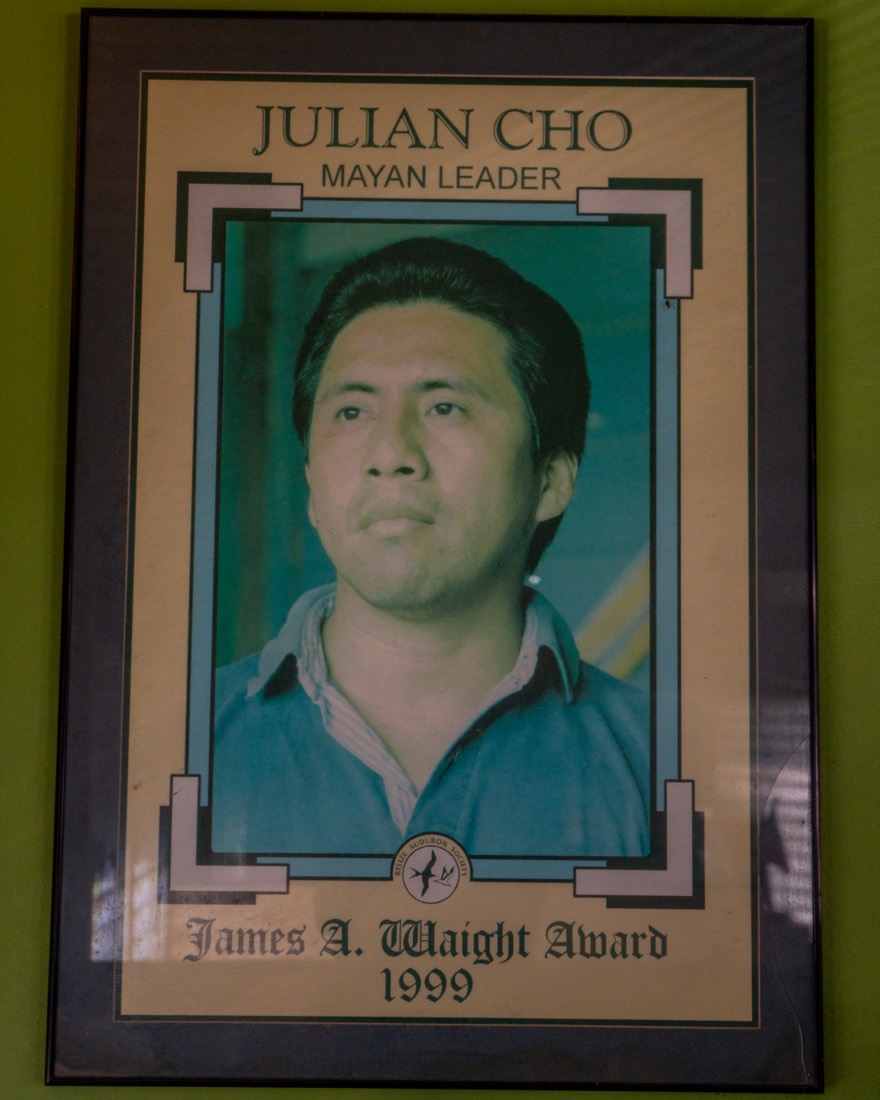
Mopan Maya leader, teacher and land rights pioneer (d. 1998)
Julian Armando Cho, a native Belizean Mopan Maya, was born in the village of San Jose in the Toledo District of Belize. The sixth child of Mr. and Mrs. Juan Cho, Julian was driven with determination to educate himself. He attended high school at St. Peter Claver College in Punta Gorda Town; tertiary level education at St. John’s College, Junior College, in Belize City; and received a Bachelor of Arts degree in Philosophy from St. Louis University, Missouri, in the United States. Julian’s educational mission crossed paths with the Society of Jesus. He was drawn to their work in education, human rights, and social justice; hence he contemplated becoming a Jesuit priest. However, Julian pursued a different path by returning to Belize where he served as an English teacher at St. John’s College (1990–1991), Sacred Heart College (1991–1994), and the Toledo Community College (1994–1998). Julian later married Magdalena Coc in December of 1992. Julian and Maggie were blessed with two children, son Ian Cho (1994), and daughter Ingrid Cho (1998).
Julian’s belief in social justice led him to join the Toledo Maya Cultural Council (TMCC), a group working for the indigenous people of the Toledo District. His dedication and contribution led the founding fathers of TMCC and the indigenous communities to unanimously elect him as chairman of the council in December 1995. Julian brought international attention to TMCC as a force for indigenous rights. He established partnerships with other organizations throughout the world; and strengthened the financial and human resources of TMCC. Julian also mobilized his people into functional groups, inspiring the formation of the Toledo Alcalde Association (TAA), and the Toledo Maya Women’s Council.
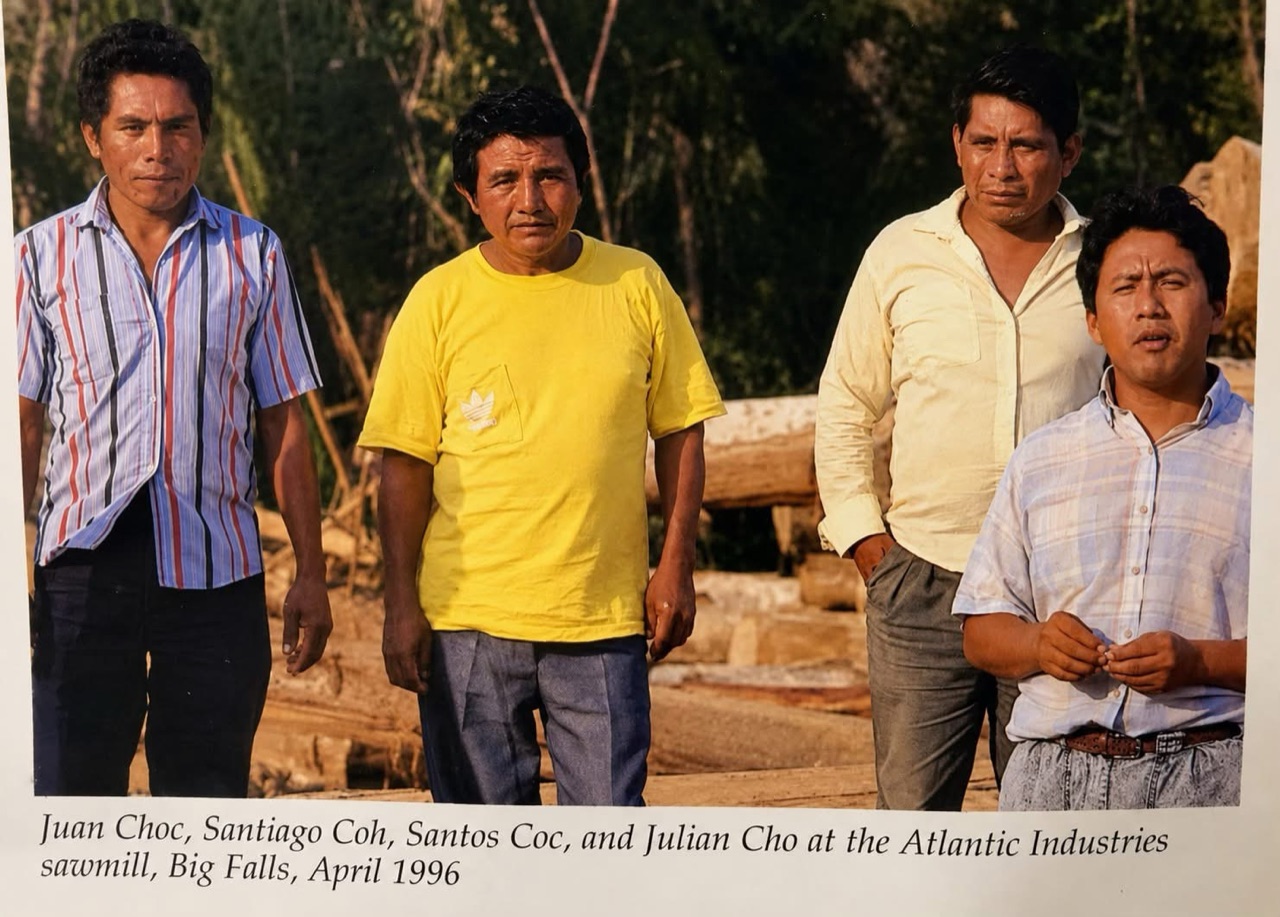
On December 3rd 1995, Julian led his people into a peaceful demonstration march to voice their concerns over the granting of logging concessions on indigenous lands. Julian was concerned about deforestation, and the resultant threat to the livelihood of nearby communities. His remarkable ability to mobilize communities and his strong affiliation with the Indian Law Resource Center (ILRC) enabled him to effectively challenge the government of the day. Under his leadership TMCC along with the TAA sued the government of Belize for not recognizing and respecting the land and resource rights of the Maya communities. Julian’s efforts received international attention. Hence, international concern initiated the evaluation and mapping of areas inhabited by the Mayas, a project that resulted in the production of the Maya Atlas. Cho’s last and final victory was the signing of a Memorandum of Understanding, November 25, 1998, with the Prime Minister of Belize to negotiate a solution to the Maya land rights struggle.
Julian Cho was a man truly devoted to social justice and to the protection of the environment. Cho’s untimely death in December, 1998 was a huge loss to the Maya people and to the environment of southern Belize. While the facts behind his death remain unresolved; popular opinion asserts that Cho may have been a victim of his work as a human rights advocate. Nevertheless, his legacy lives on. The Belize Audubon Society posthumously awarded Cho the James A. Waight Conservation Award for his tireless efforts in the protection and enhancement of Belize’s Environment; and his efforts to advocate on behalf of the Maya people. The Julian Cho Technical High School was also named in his honor. Every year on April 6, Julian Cho is celebrated and remembered as a dedicated Maya leader, human rights activist, friend, father, and a son of the Toledo District.
An alliance of Maya organizations and leaders. JCS works alongside the MLA to advance land rights nationally and internationally.
The fiduciary organization at the heart of the movement — providing technical, legal and secretariat support to the Toledo Alcaldes Association and the 39 Maya villages of Toledo and South Stann Creek.
The body of traditional village leaders (alcaldes). JCS provides technical and secretariat support to the TAA’s representation of Maya villages.
The Julian Cho Society is a registered Non-Profit Organization under the Belize Companies Registry, governed by the NPO Act & Laws of Belize. JCS is a fiduciary organization that supports the Toledo Alcalde Association in their struggle to secure land tenure for the Maya people of Southern Belize.
The Maya people of southern Belize have pursued recognition of their customary land rights through their communities, the national courts, and regional human rights bodies. JCS supports this ongoing work — documenting history, defending rights, and accompanying communities at every milestone.
Detailed land-rights history and milestone copy to be provided by JCS.
Drag or scroll sideways to follow the journey
Supreme Court of Belize
IACHR Decision — Inter-American Commission on Human Rights
Supreme Court of Belize
Supreme Court of Belize
Court of Appeal
Caribbean Court of Justice
Landmark Maya land rights cases, 1996–2015.
Since the 2015 CCJ Consent Order, the Maya People and the Government of Belize have taken step after step toward recognition. Explore each of the fifteen milestones below.
1 / 15
The Caribbean Court of Justice affirmed that the Maya People of southern Belize have rights to their lands and resources.
The Toledo Maya Land Rights Commission is established by the Government of Belize to represent the Government in the implementation of the CCJ Consent Order. The Chair of the Commission is appointed.
An Indigenous Peoples' Expert is appointed to support the TMLRC in the implementation of the CCJ Consent Order, acting as mediator between the Government and the Maya People.
A roadmap for the Maya People and the Government of Belize to work together to:
Provides context and overview for land policy in Belize. It includes principles, definitions, and actions to recognize and protect Maya land and other rights — the first step in drafting a law.
The authority to address complaints that breach the CCJ Consent Order (Paragraph 4) — it receives complaints, investigates, and makes recommendations to resolve disputes in the meantime.
An Authority is appointed to implement the Dispute Resolution Framework.
Gordon Bennett is appointed by the Government of Belize to draft the law to recognize the land rights and other rights of the Maya People.
The Maya People and the Government of Belize agree to find funds together to implement the CCJ Consent Order.
A methodology to guide the process to auto-delimit, demarcate, and title Maya lands:
Supports the joint implementation of the CCJ Consent Order between the Government and the Maya People:
Steps to guide development projects, legislation writing, policy, and other actions that affect the lands and well-being of the Maya People.
Villages identify their lands, harmonize boundaries with their neighbours, and prepare maps.
A Ministry established by the Government of Belize and given the authority to implement the 2015 CCJ Consent Order.
The Government of Belize appoints a new Commissioner of the TMLRC.
Ten members guide the Julian Cho Society. Profiles to be added.
Position 1
Position 2
Position 3
Position 4
Position 5
Position 6
Position 7
Position 8
Position 9
Position 10
As a registered organization, JCS publishes independently audited financial statements each year. This transparency safeguards our fiduciary role to the Maya communities and donor partners we serve.